

Deep cavity and pocket machining presents a consistent challenge in CNC operations: achieving sufficient reach without sacrificing rigidity, accuracy, or tool life.
Two common approaches are typically considered:
- Using a long-reach end mill
- Using a shrink fit extension with a standard-length cutting tool
Although both methods increase reach, their performance in real machining conditions differs significantly. This article provides a practical comparison to help you select the right solution for demanding applications.
Shrink fit extensions generally outperform long-reach end mills in deep cavity machining by providing higher rigidity, lower runout, and more consistent tool life.
Understanding the Two Approaches
Long-Reach End Mills
A long-reach end mill is a single, extended cutting tool designed to access deep features directly.
Key benefits
- Simple, one-piece setup
- Lower initial purchase cost
- Readily available in standard diameters
Key limitations
- Reduced rigidity due to high length-to-diameter ratio
- Greater susceptibility to deflection and chatter
- Inconsistent tool life, especially in harder materials
As reach increases, bending forces rise rapidly, often limiting achievable feed rates and depth of cut.
Shrink Fit Extensions
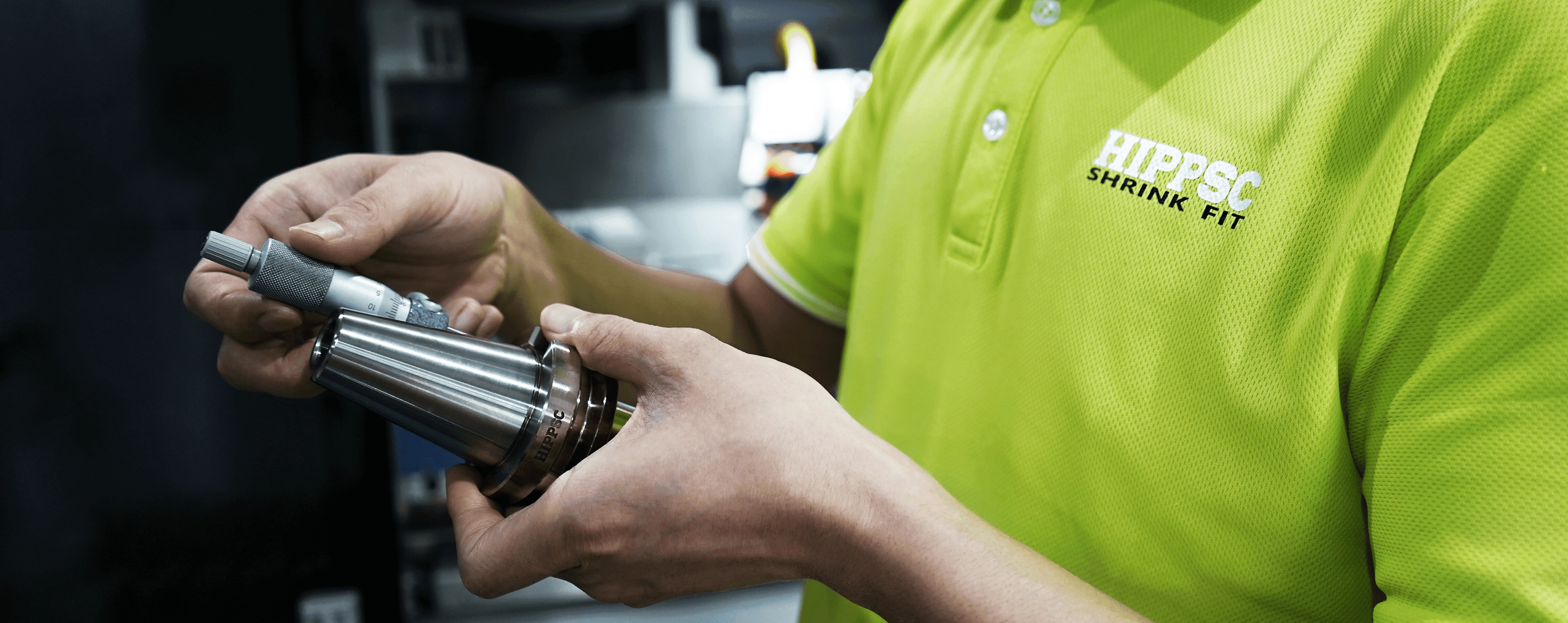
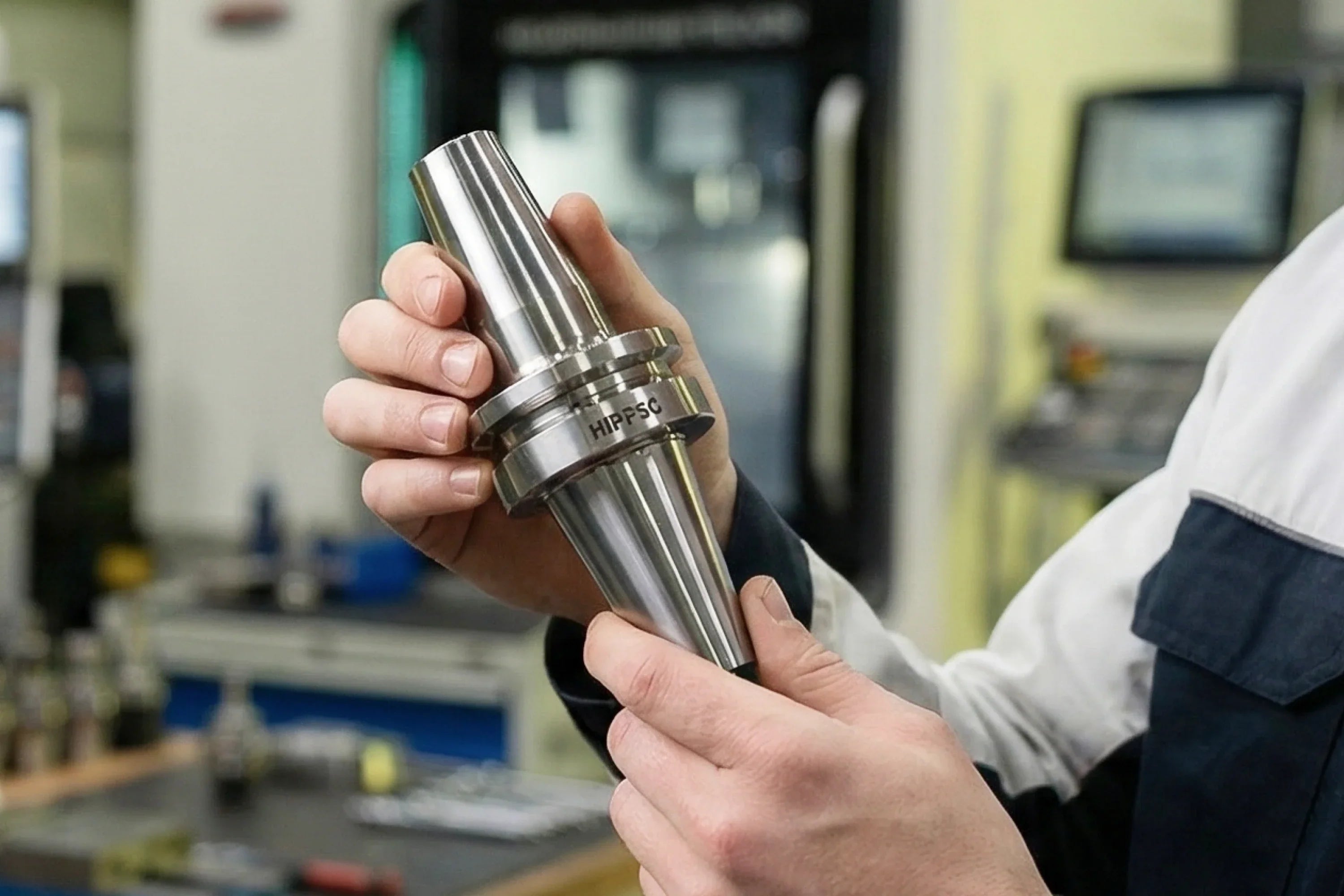
A shrink fit extension allows a standard-length cutting tool to be mounted into a thermally clamped extension holder. The holder is heated, the tool is inserted, and once cooled, the holder contracts tightly around the shank, creating a highly rigid and concentric connection.
At HIPPSC, shrink fit extensions are engineered specifically to preserve rigidity and accuracy when extended reach is required.
Related HIPPSC products
Performance Comparison at a Glance
| Performance Factor | Shrink Fit Extension | Long-Reach End Mill |
|---|---|---|
| System rigidity | Very high | Low |
| Typical runout | ≤ 0.003 mm | Tool dependent |
| Chatter resistance | Excellent | Limited at depth |
| Tool life consistency | High | Variable |
| Flexibility | Reusable with multiple tools | Dedicated tool only |
| Long-term cost efficiency | High | Lower |
Rigidity and Deflection Control
In deep milling, rigidity is often more important than reach itself.
With a long-reach end mill, the entire tool length is subject to bending under cutting forces. In contrast, a shrink fit extension:
- Keeps the cutting tool short
- Transfers overhang into a rigid holder body
- Reduces bending moment at the cutting edge
The result is improved stability, allowing:
- Higher feed rates
- Deeper axial engagement
- More predictable machining behavior
Runout and Surface Finish
Shrink fit clamping delivers extremely low runout due to uniform 360-degree contact between the holder and tool shank. This is especially critical for:
- Mold and die cavities
- Aerospace structural pockets
- Precision finishing operations
Long-reach end mills are more prone to runout variation, which can lead to uneven flute loading, accelerated wear, and visible surface defects.
Tool Life and Cost Efficiency
Although long-reach end mills may appear cost-effective initially, they are often replaced more frequently due to:
- Increased vibration
- Edge chipping
- Breakage under load
Shrink fit extensions, by contrast:
- Are reused across multiple jobs
- Allow replacement of only the cutting tool
- Enable standardization of tooling inventory
Over time, this typically results in a lower total cost of ownership, particularly in production environments.
When a Shrink Fit Extension Is the Better Choice
A shrink fit extension is strongly recommended when:
- Machining deep cavities or pockets
- Chatter limits productivity
- Surface finish and dimensional accuracy are critical
- Tool life must be consistent and predictable
Common applications include mold & die, aerospace, automotive tooling, and precision component manufacturing.
Explore HIPPSC shrink fit extension solutions here: https://www.hippsc.com/collections/shrink-fit-extension-holders
When a Long-Reach End Mill May Be Acceptable
A long-reach end mill can still be suitable when:
- Cutting forces are very light
- Materials are soft
- Tolerance and finish requirements are minimal
- Extension length is only marginal
For most demanding applications, however, it remains a compromise rather than an optimal solution.
Conclusion
While both approaches provide additional reach, shrink fit extensions consistently outperform long-reach end mills in rigidity, accuracy, tool life, and process stability.
For shops focused on improving deep-milling performance and reducing variability, shrink fit extensions represent a more reliable and professional tooling strategy.
Learn More
View HIPPSC’s precision shrink fit extension holders:
https://www.hippsc.com/collections/shrink-fit-extension-holders

Leave a comment
All comments are moderated before being published.
This site is protected by hCaptcha and the hCaptcha Privacy Policy and Terms of Service apply.