
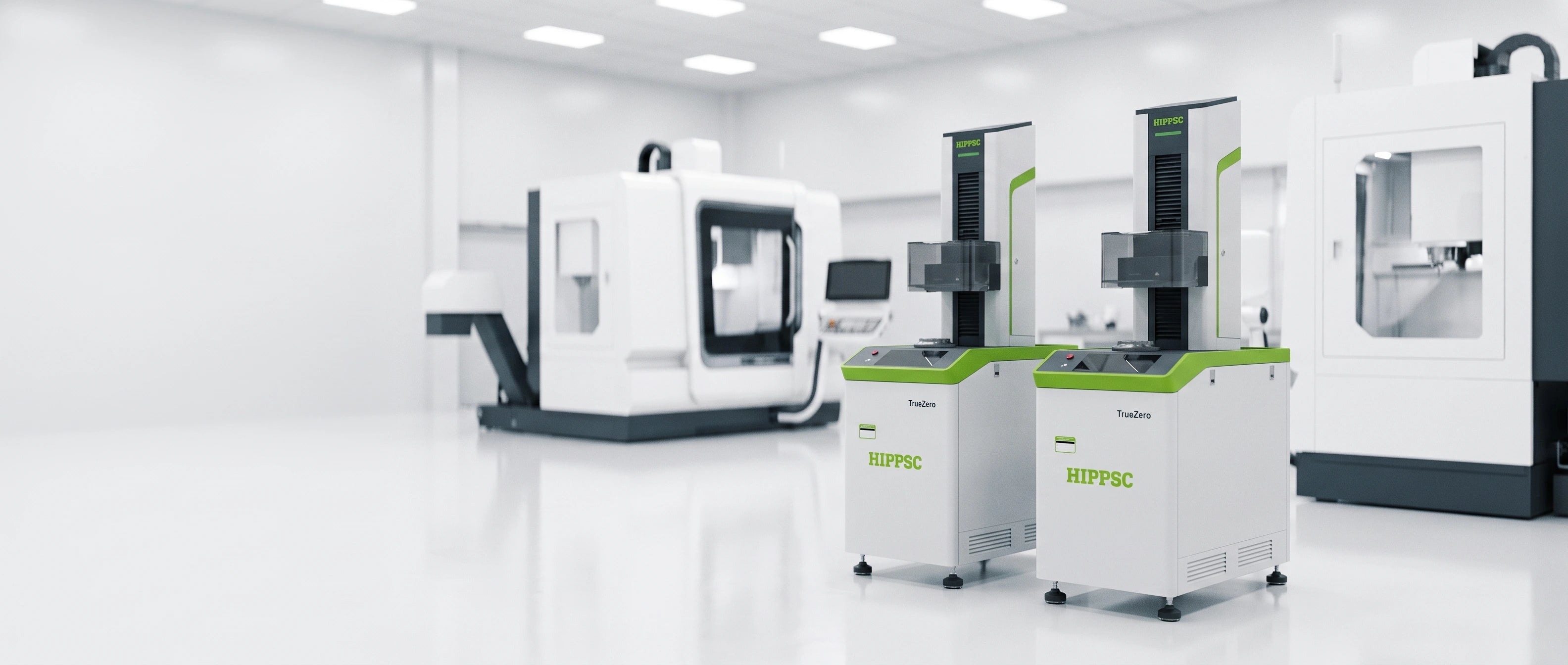
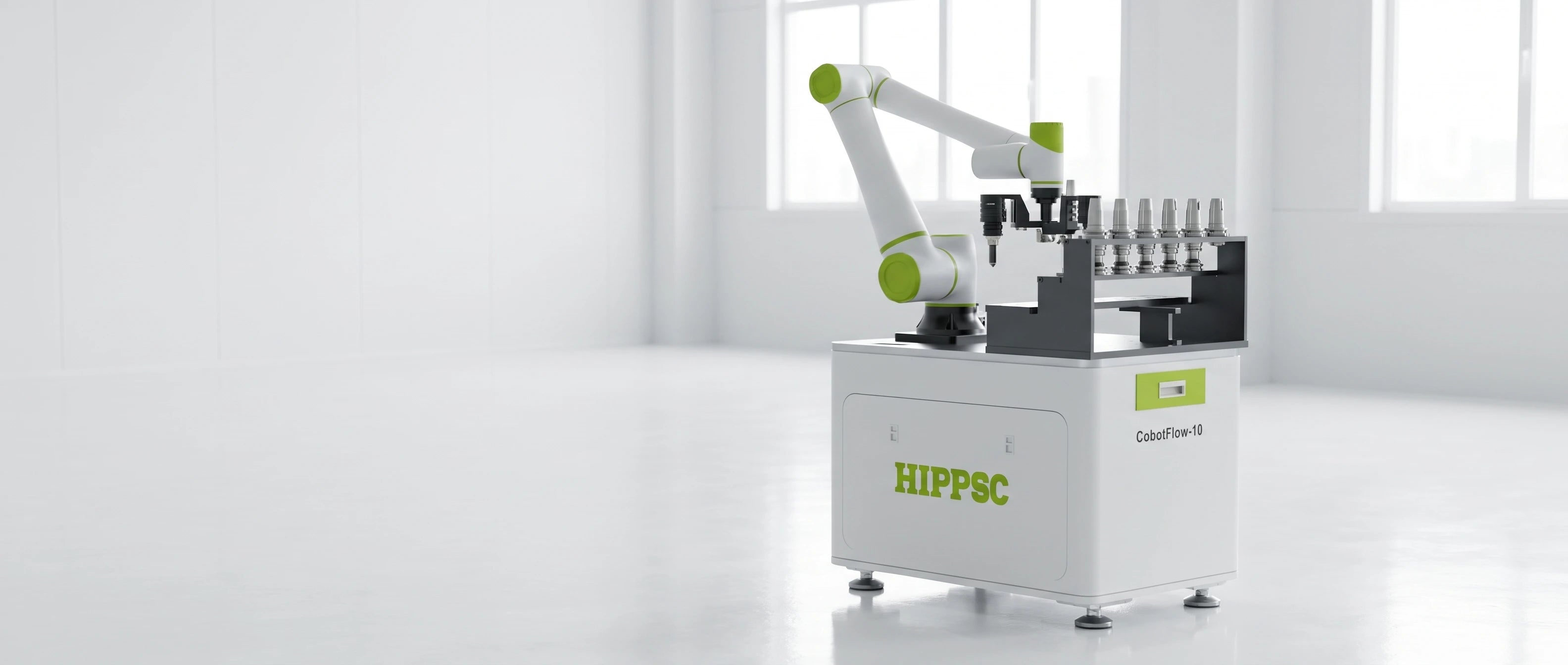
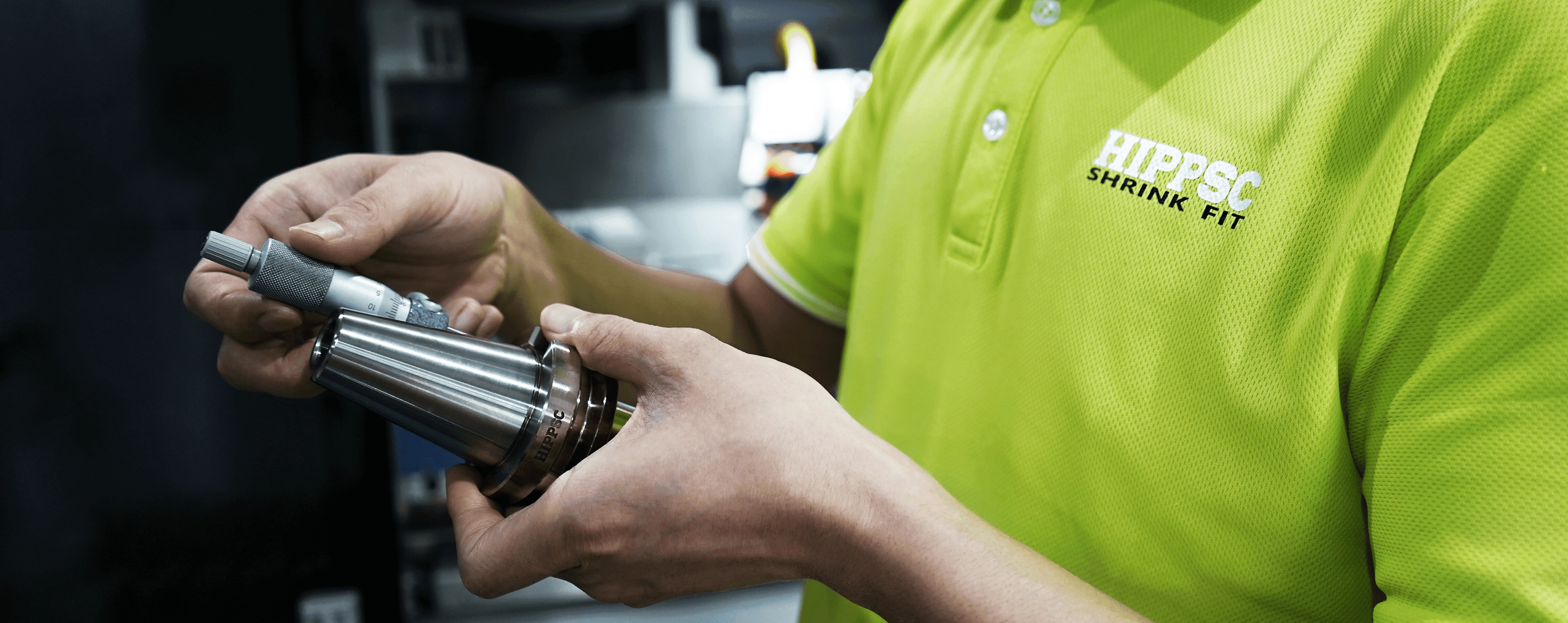
Choosing the right CNC tool holder is essential for machining accuracy, cutting stability, surface finish, and tool life. Different tool holding systems offer different advantages, from the versatility of ER collet chucks to the precision of shrink-fit holders and the vibration damping of hydraulic chucks.
In this guide, we compare four common CNC tool holder types: ER collet, hydraulic, shrink-fit, and side-lock. Learn how each clamping method works, where it performs best, and how to select the right holder for your machining application.
Why Does Tool Holder Selection Matter in CNC Machining?
A CNC tool holder connects the cutting tool to the machine spindle. Although it may seem like a small component in the machining system, its clamping performance directly influences tool runout, rigidity, vibration, and resistance to tool slippage.
Excessive runout can cause uneven cutting loads across the tool's cutting edges. This may accelerate tool wear, reduce dimensional consistency, and compromise surface finish. Insufficient clamping capability can also allow a cutting tool to slip or pull out during demanding machining operations.
Selecting the correct tool holder helps manufacturers achieve more consistent results, reduce unnecessary tool changes, and improve process reliability. The best choice depends on the cutting operation, workpiece material, spindle speed, tool geometry, and required accuracy.
CNC Tool Holder Types Compared
The four common clamping methods each have distinct strengths. Use the following table as a starting point when comparing tool holding solutions.
| Feature | ER Collet | Hydraulic | Shrink-Fit | Side-Lock |
|---|---|---|---|---|
| Clamping method | Mechanical collet compression | Hydraulic pressure | Thermal expansion and contraction | Side set screw |
| Runout control | Good with quality components | Excellent with precision systems | Excellent with precision systems | Generally lower concentricity |
| Clamping characteristics | Versatile, application-dependent grip | Uniform clamping with vibration damping | High rigidity and secure grip | Positive mechanical retention |
| Tool change | Manual collet change | Quick mechanical release | Requires heating equipment | Manual screw adjustment |
| Main advantage | Flexibility and cost efficiency | Precision and damping | Precision, rigidity, and slim profile | Resistance to tool pullout |
| Typical applications | General milling and drilling | Finishing, reaming, and precision work | High-speed milling and deep cavities | Heavy roughing and demanding cuts |
Important: Actual runout, torque capacity, and permissible spindle speed vary by holder design, size, quality, tool shank, and operating conditions. Consult the manufacturer's specifications for critical applications.
1. ER Collet Tool Holders: Versatility for General Machining
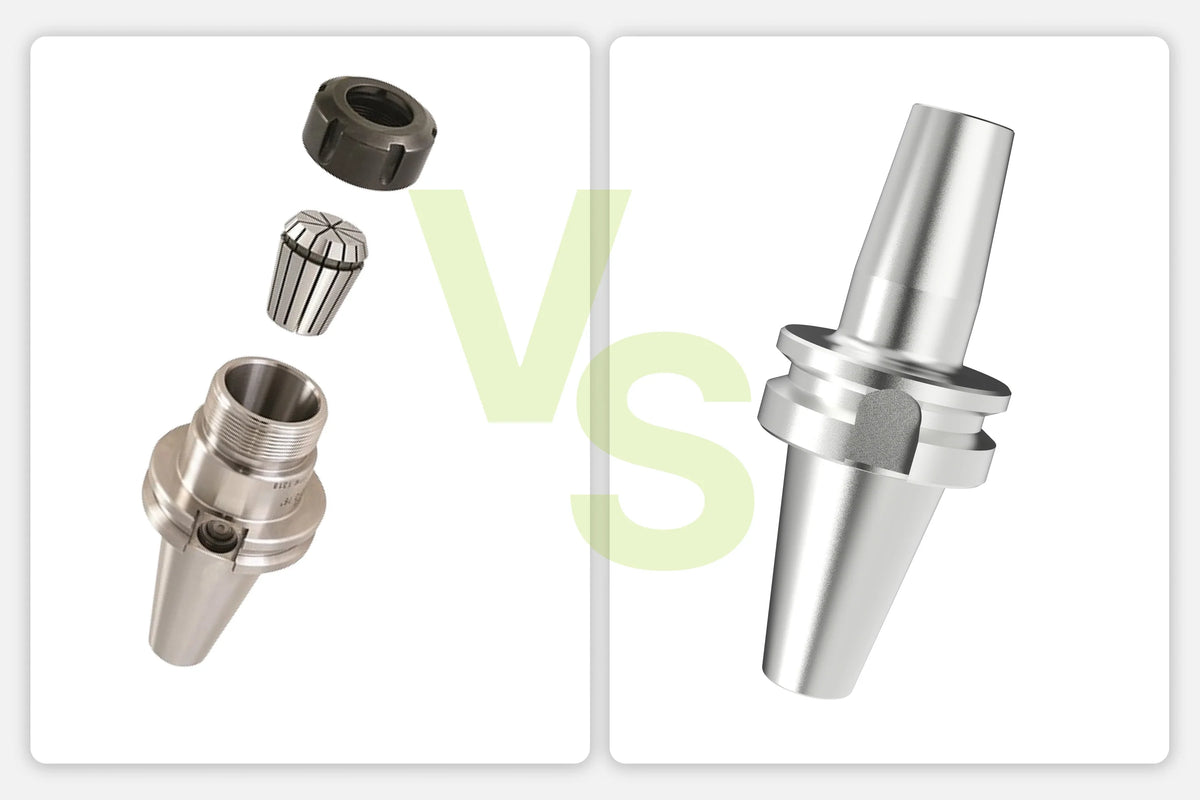
ER collet tool holders are among the most widely used CNC tool holding systems. They use a slotted collet compressed by a nut to grip the cutting tool's cylindrical shank.
One of their biggest advantages is versatility. By changing the collet, operators can accommodate different tool shank diameters within the compatible range of the holder and collet series. This makes ER collet systems practical for machine shops that use a broad selection of cutting tools.
Advantages of ER Collet Holders
- Flexible tool diameter options with compatible collets.
- Relatively economical initial investment.
- Convenient for general-purpose machining and mixed production.
- No dedicated heating unit or hydraulic clamping mechanism required.
Limitations of ER Collet Holders
Runout and gripping performance depend on collet quality, cleanliness, nut condition, correct tightening torque, and proper assembly. For demanding high-speed finishing or applications requiring extremely low runout, a precision shrink-fit or hydraulic system may be more suitable.
Best for: General milling, drilling, versatile job shops, and applications where flexibility and tooling cost are important considerations.
2. Hydraulic Tool Holders: Precision with Vibration Damping
Hydraulic tool holders use an internal hydraulic chamber to apply pressure to a thin clamping sleeve around the cutting tool shank. This provides uniform clamping and can help dampen vibration during machining.
Their combination of precision and damping makes hydraulic holders attractive for finishing operations, reaming, fine boring, and other applications where surface quality and dimensional consistency are critical.
Advantages of Hydraulic Tool Holders
- Excellent runout performance in precision-grade designs.
- Effective vibration damping for improved cutting stability.
- Convenient tool changes without a dedicated heating cycle.
- Useful for precision finishing and selected long-reach applications.
Limitations of Hydraulic Tool Holders
Hydraulic holders typically cost more than standard ER collet systems. Their clamping capacity and operating limits must also be considered when machining with high torque or aggressive material removal rates. Follow the manufacturer's instructions for compatible shank sizes and permitted cutting loads.
Best for: Precision finishing, reaming, fine boring, and machining applications where vibration control is a priority.
3. Shrink-Fit Tool Holders: High Precision and Rigidity
Shrink-fit tool holders use the principles of thermal expansion and contraction to secure a cutting tool. A dedicated heating unit expands the holder bore, allowing the tool shank to be inserted. As the holder cools, the bore contracts and grips the tool circumferentially.
Because shrink-fit holders do not require a conventional collet, nut, or side set screw at the clamping end, they can offer a compact, symmetrical design. This makes them particularly useful for high-speed machining, precision finishing, and applications where tool access is limited.
Advantages of Shrink-Fit Tool Holders
- Excellent concentricity and low runout in precision designs.
- High radial rigidity and secure circumferential clamping.
- Slim profiles for improved access to deep cavities and complex geometries.
- Potential for excellent balance in high-speed applications.
- No conventional collet or clamping nut at the tool end.
Limitations of Shrink-Fit Tool Holders
Shrink-fit systems require compatible heating equipment and appropriate handling procedures. Tool changes involve heating and cooling, so the overall workflow should be considered when evaluating production efficiency. The cutting tool shank must also meet the holder manufacturer's dimensional and material requirements.
Best for: High-speed milling, precision finishing, mold and die machining, deep-cavity machining, and applications that demand a combination of low runout, rigidity, and tool access.
Explore the HIPPSC shrink-fit tool holder collection to find options for your CNC machining requirements.
4. Side-Lock Tool Holders: Secure Clamping for Demanding Cuts
Side-lock tool holders, also known as Weldon-style holders, use a set screw to secure a cutting tool against a compatible flat on its shank. This positive mechanical clamping method is commonly selected when resistance to tool slippage and pullout is a priority.
Side-lock holders can be useful for roughing operations and applications involving substantial cutting forces. However, because the set screw applies force from one side, concentricity is generally poorer than with precision shrink-fit and hydraulic systems.
Advantages of Side-Lock Tool Holders
- Positive mechanical engagement with a compatible tool shank.
- Good resistance to tool rotation and pullout when properly installed.
- Practical for demanding roughing and selected high-load operations.
- Simple mechanical design and straightforward tool changes.
Limitations of Side-Lock Tool Holders
The side screw can introduce eccentricity, making this system less suitable for applications that demand exceptionally low runout. Tool shanks must have the correct flat and be compatible with the holder's screw arrangement.
Best for: Heavy roughing, high-load milling, and applications where positive mechanical retention is more important than achieving the lowest possible runout.
Which Tool Holder Offers the Best Accuracy?
If machining accuracy is the main priority, shrink-fit and hydraulic tool holders are both strong candidates. Both systems can achieve very low runout when manufactured to appropriate tolerances and assembled correctly.
For example, certain precision-grade holders are specified for runout of 0.003 mm (3 microns) or less under defined measurement conditions. This should not be treated as a universal specification for every holder or tool assembly.
Shrink-Fit vs. Hydraulic Tool Holders
Shrink-fit holders are often preferred for high-speed finishing and deep-cavity machining because of their rigidity and slim clamping profile. Hydraulic holders offer excellent precision along with vibration damping, making them attractive for finishing, reaming, and operations sensitive to chatter.
The final result depends on more than the holder alone. Tool projection, spindle condition, holder balance, cutting parameters, tool geometry, and workpiece rigidity all contribute to machining accuracy.
How to Balance Clamping Force and Tool Change Efficiency
The right clamping method depends on the forces generated during cutting and the speed at which your shop needs to change tools.
- For heavy roughing: Consider a suitable side-lock holder or heavy-duty milling chuck with sufficient torque and pullout resistance for the operation.
- For frequent tool changes: ER collet holders offer a versatile, economical solution for shops handling many tool diameters and general-purpose operations.
- For precision finishing: Shrink-fit and hydraulic holders can help maintain low runout and stable cutting conditions.
- For vibration-sensitive operations: Hydraulic holders may provide an advantage through their damping characteristics.
Rather than selecting one holder type for every operation, many machine shops benefit from combining different clamping systems according to machining requirements.
How to Choose the Right CNC Tool Holder: 4 Steps
Step 1: Evaluate Cutting Forces and Torque Requirements
Consider the workpiece material, cutter diameter, axial and radial engagement, feed rate, and depth of cut. Heavy roughing generally requires sufficient gripping torque and pullout resistance. Confirm that the holder is rated for your intended operation.
Step 2: Define Your Accuracy and Surface Finish Requirements
For high-precision finishing, evaluate the specified runout of the complete tool assembly. Shrink-fit and hydraulic holders are often suitable when low runout is essential. Also consider tool projection, rigidity, vibration, and the dimensional tolerances of the part.
Step 3: Verify Machine and Tool Compatibility
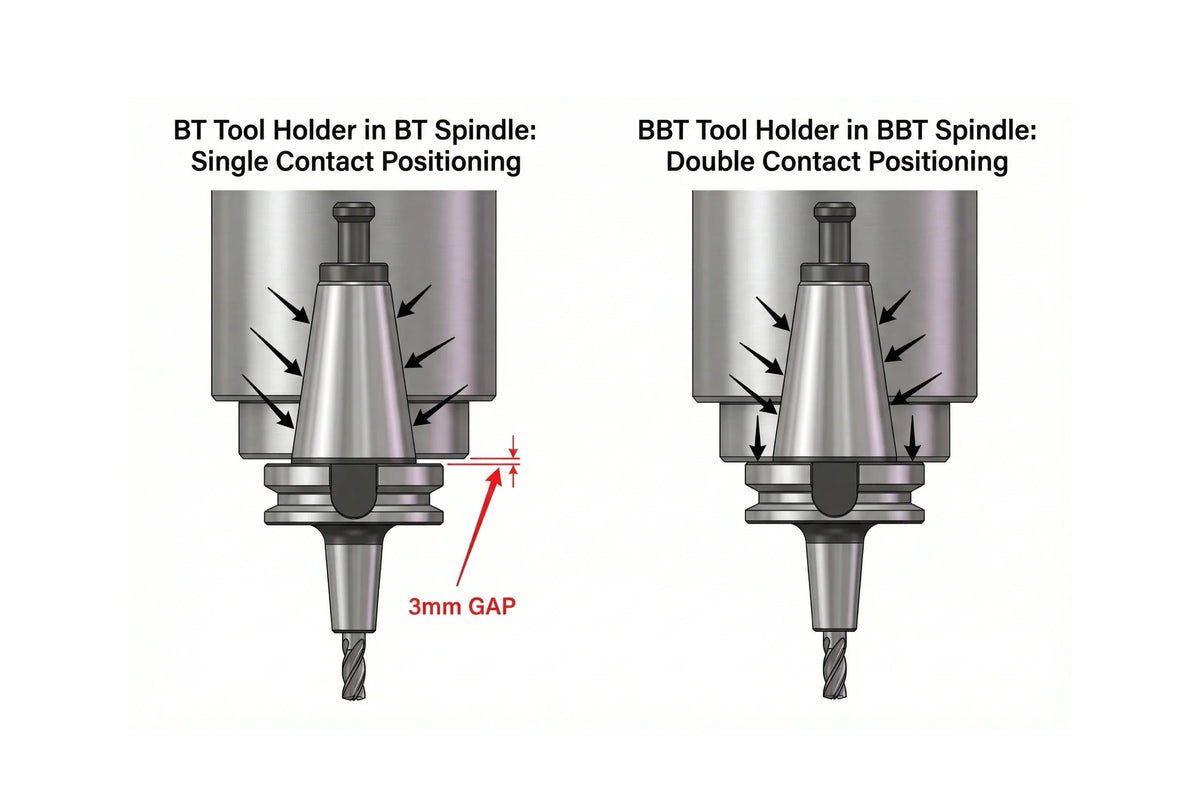
Confirm the machine-side interface, such as BT, BBT, HSK, or CAT, matches your spindle and machine requirements. Then verify the cutting tool's shank diameter, clamping method, permissible speed, coolant requirements, and required tool reach.
Step 4: Compare Total Operating Costs
Look beyond the initial holder price. Consider heating equipment, consumables, tool change time, operator handling, tool life, scrap risk, maintenance, and inventory requirements. A higher initial investment may be justified if it improves process stability or reduces overall production costs.
Practical Tool Holder Selection Examples
The following scenarios illustrate how different clamping methods can be matched to machining priorities. Actual improvements should be verified through controlled production trials.
Case 1: Precision Mold and Die Machining
A mold shop machining electrodes or intricate cavity features may benefit from shrink-fit holders. Their slim profile, rigidity, and low runout can support consistent finishing and access to difficult-to-reach geometries. Inspect dimensional results, surface finish, and electrode wear before and after changing the tooling setup.
Case 2: High-Load Aluminum Roughing
A production line machining aluminum components may consider side-lock holders when tool pullout is a concern during aggressive cuts. Feed rates should be increased only after verifying holder capacity, cutting-tool compatibility, spindle limits, and machining stability.
Case 3: General-Purpose Job Shop
A job shop running varied parts and frequent tool changes may standardize selected ER collet systems to reduce tooling complexity and accommodate a broad range of tool diameters. The resulting efficiency depends on the existing workflow, collet inventory, and tool change procedures.
Best Practices for Better Tool Holding Performance
- Clean spindle tapers, holder interfaces, and tool shanks before assembly.
- Inspect collets, nuts, set screws, and holder bores for wear or damage.
- Measure runout at the appropriate location on the assembled tool.
- Use balanced assemblies and observe spindle speed limits for high-speed machining.
- Follow the manufacturer's installation and removal procedures.
- Monitor tool wear, surface finish, dimensional consistency, and signs of tool movement.
Good tool holding practices help preserve machining consistency and reduce avoidable downtime. Even a high-quality holder cannot compensate for a damaged spindle interface, an unsuitable cutting tool, or incorrect cutting parameters.
Frequently Asked Questions About CNC Tool Holders
1. Which CNC tool holder is best for high-precision machining?
Shrink-fit and hydraulic tool holders are both excellent options for precision machining. Shrink-fit holders offer high rigidity and a slim profile, while hydraulic holders combine precision with vibration damping. The best choice depends on tool reach, cutting forces, surface finish requirements, and the holder's published specifications.
2. Are shrink-fit holders more accurate than ER collet holders?
Precision shrink-fit holders can achieve lower runout than many standard ER collet assemblies. However, performance varies with holder quality, collet condition, tool shank tolerance, assembly, and measurement location. Compare documented specifications rather than relying on holder type alone.
3. Are hydraulic tool holders suitable for heavy roughing?
Hydraulic holders can handle many milling operations, but their torque capacity and permissible cutting loads vary by design. For aggressive roughing, verify the manufacturer's ratings and consider a suitable heavy-duty milling chuck or side-lock holder if positive mechanical retention is required.
4. Why are side-lock holders used for heavy cutting?
Side-lock holders use a set screw against a compatible shank flat to provide positive mechanical retention. This can help resist tool rotation and pullout under demanding cutting conditions. Their generally higher runout makes them less attractive for applications requiring exceptional concentricity.
5. Are ER collet holders good for high-speed machining?
Properly specified and balanced ER collet assemblies can be used for high-speed machining. The maximum permissible speed depends on the holder, nut, collet, tool assembly, balance quality, and machine specifications. Precision shrink-fit holders may be preferable when low runout and a slim profile are priorities.
6. Does a better tool holder increase tool life?
A suitable tool holder can help improve tool life by reducing runout, uneven cutting loads, vibration, and tool movement. However, the amount of improvement depends on the original setup, cutting conditions, tool material, and workpiece. Test changes under comparable production conditions to quantify the benefit.
7. Does the spindle interface affect tool holder performance?
Yes. The machine-side interface must match the spindle, including the taper system and any required retention hardware. Common interfaces include BT, BBT, HSK, and CAT. Correct fit, clean contact surfaces, and proper assembly are essential for reliable performance.
Conclusion: Match the Tool Holder to the Machining Operation
There is no single best CNC tool holder for every machining application. ER collet holders provide flexibility and cost efficiency, hydraulic holders offer precision and vibration damping, shrink-fit holders combine low runout with high rigidity, and side-lock holders provide positive mechanical retention for demanding cuts.
The key is to match the clamping method to the operation's torque, accuracy, tool reach, spindle speed, and production requirements. With the right tool holding strategy, machine shops can improve process consistency, manage tool wear, and make more informed decisions about machining productivity.
Looking for a precision tool holding solution? Explore the HIPPSC shrink-fit tool holder collection to learn more about options for high-precision CNC machining.

Leave a comment
All comments are moderated before being published.
This site is protected by hCaptcha and the hCaptcha Privacy Policy and Terms of Service apply.