


BBT shrink-fit tool holders might sound intimidating at first, but they're actually a straightforward upgrade that can transform your machining results. Let's break down what they are, why they matter, and how to get the most out of them.
What Makes a BBT Holder Different?
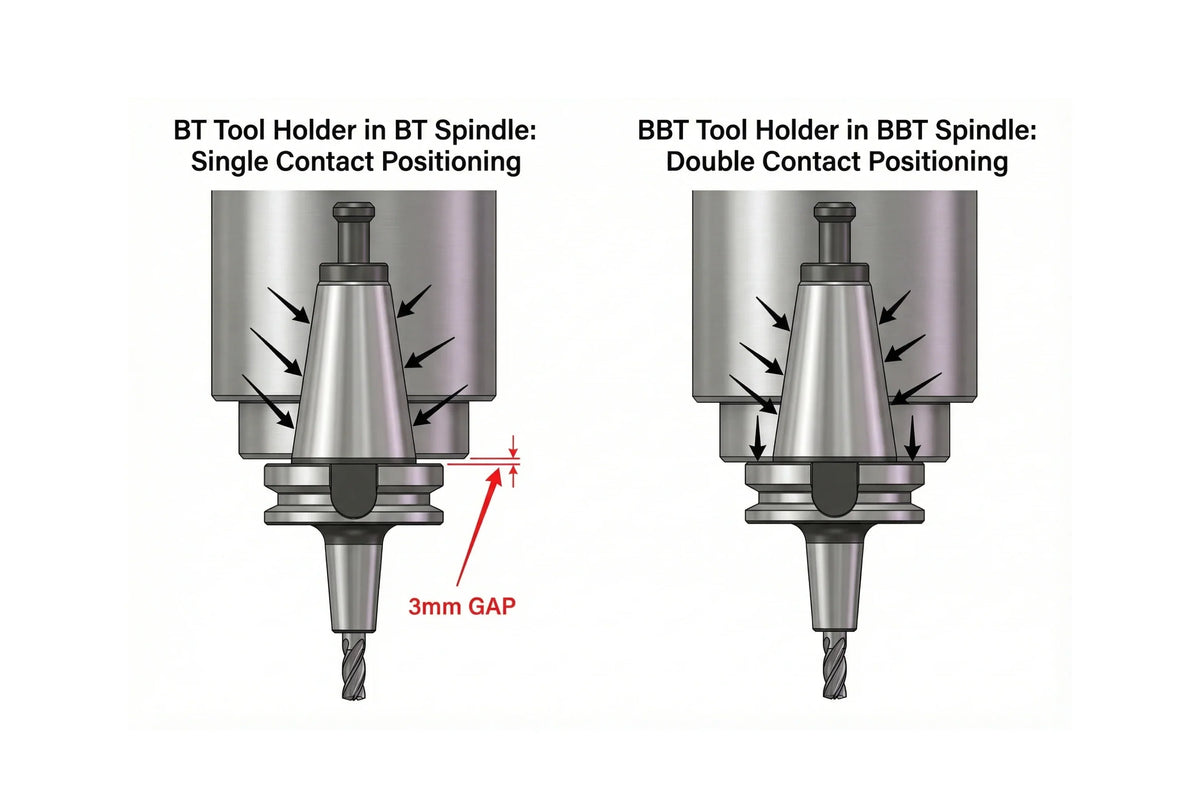
A BBT shrink-fit tool holder builds on the traditional BT taper design by adding something extra: a flange-face contact system. Instead of relying on taper contact alone, BBT holders clamp your tool from two points—the taper and the face. This dual-contact design creates a rock-solid grip that significantly boosts rigidity and positioning accuracy.
BBT vs. BT: What's the Real Difference?
Standard BT holders only have taper contact. This works fine at moderate speeds, but when you push the RPMs, taper-only contact can loosen slightly and introduce vibration. BBT holders solve this with that extra face contact. The result? Much better vibration resistance, especially during high-speed operations. If you've ever seen chatter marks or gotten a poor surface finish, upgrading to BBT might be exactly what you need.
Can You Use BBT on a Standard BT Spindle?
Yes—but there's a catch. You'll need to swap in a compatible pull stud, and your spindle face has to be properly set up for face contact. If you're thinking about making the switch, it's worth verifying your spindle specs first or reaching out to your machine tool supplier.
Real-World Benefits You'll Actually Notice
- Smoother surface finishes – Less vibration means cleaner results on your parts.
- Higher cutting speeds – Dual contact lets you push harder without chatter.
- Longer tool life – Better rigidity means less tool wear and longer runs between replacements.
- Perfect for precision work – Mold making, tight-tolerance finishing, and high-speed milling all benefit hugely.
How to Install and Use Your BBT Holder
- Choose the right holder – Match it to your spindle specification (taper size, pull stud type, etc.).
- Clean everything – Wipe down the holder taper and spindle face to remove any dirt or debris. Clean contact surfaces are critical for holding force.
- Install the pull stud – Insert the correct stud and torque it to spec. This varies by holder, so check your documentation.
- Load into the spindle – Insert the holder and tighten to the recommended clamping force. Don't guess—use the right torque wrench and settings.
What Real Results Look Like
Here's what shops actually report when they switch to BBT:
- Surface roughness on aluminum improved dramatically—we've seen Ra drop from 1.6 μm down to 0.8 μm on the same part.
- Tool life in stainless steel milling climbs by about 20%, which means fewer tool changes and less downtime.
- Chatter marks that plagued deep cavity work? They disappear completely.
If you're running high-speed operations or working on parts that demand tight finishes, BBT holders are one of the most cost-effective upgrades you can make. The rigidity and accuracy they bring to your spindle easily pay for themselves in better parts and faster cycle times.

Leave a comment
All comments are moderated before being published.
This site is protected by hCaptcha and the hCaptcha Privacy Policy and Terms of Service apply.